Let It Be Good Enough – What My Horse Taught Me About Knowing When to Stop
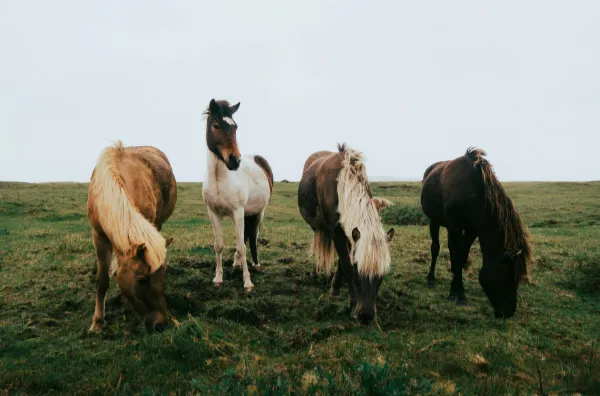
The other day, something happened with the Icelandic horse I ride regularly that made me think.
We were riding in the arena. When we canter to the right, he almost always picks up the correct lead. To the left, it doesn't always work quite as well. Sometimes he picks up the wrong lead – which is exactly what had happened the last time I rode him before our holiday.
So this time I thought: Okay, just stay relaxed, give the aids clearly and consciously, and see what happens.
And there we went – straight into the correct lead.
I was a little surprised and really happy. And of course, I praised him straight away with my voice and a pat on his neck. That's something that feels completely natural to me when I'm riding. When my horse does something well, I want him to know immediately: Yes, exactly. That was good.
A little later, during our normal work, we had another opportunity to canter to the left.
Again, he picked up the correct lead.
Again, I was happy and praised him.
And when we tried it a third time, he got it right again.
Three times in a row.
And at that point, I knew: Let it be good enough.
With my horse, I know when enough is enough
When a horse does something well, I don't want to keep repeating the same exercise endlessly. Again and again and again – perhaps until the horse gets tired or loses concentration and eventually something goes wrong.
I've learned through riding that it's often good to finish an exercise on a positive note. The horse gets praised and can leave that exercise with a good experience. Then we simply continue with the rest of our normal routine.
So for me, it was clear: This was good. I can leave it there.
And as I thought about it, something occurred to me:
I treat my horse very differently in these moments than I treat myself.
When something goes well, I simply keep going
When I do something really well at work, I rarely think about consciously noticing that moment.
Maybe I've finished a task that I've been working on for quite a while. Maybe I've finally found a solution to something that had been difficult. Perhaps a conversation went really well, or I was completely in the flow with something and I'm genuinely happy with the result.
What happens next?
Quite often, my attention immediately moves on to the next task.
Good, done. What's next? I could get that finished too. And if that doesn't take long, perhaps I could quickly start the next thing as well.
When we're used to getting a lot done and keeping track of many things at once, this can happen almost automatically. We don't even have to consciously push ourselves. Our attention simply moves on to whatever is still waiting to be done.
And within seconds, a really good moment can disappear.
I think that's actually a shame.
With my horse, I know instinctively how important it is to praise him. I don't wait half an hour and then say, “Oh, by the way, that canter transition earlier was really good.”
I praise him when it happens.
So why shouldn't I also notice my own good moments while they're happening?
This doesn't mean stopping work every time something goes well
Of course, I can't take this principle from working with a horse and apply it literally to my working day.
If I finish something particularly well at ten in the morning, I can hardly say, “That was great. I'm done for today.”
That's not what I mean.
It's more about that small moment between one thing and the next. A brief pause before I move straight on.
I did that well. I'm happy with it. I can let this be good for a moment.
It sounds so simple. And yet, many of us find it much easier to go over a mistake again in our minds than to stay with something that went well.
When something doesn't go the way we wanted, we might think about it for a long time. We wonder what we could have done differently, get annoyed with ourselves for making a mistake, or still think hours later about something we wish we hadn't said.
But when something goes really well, sometimes all it gets is a quick mental tick:
Done.
And on we go.
Maybe we can give a little more attention to the things that go well, too.
I like to think of it like this:
A little island in your day
A moment when something went well. A conversation you're happy with. A task you've finally completed. Something that felt easier than you expected. Or perhaps a moment when you realise: I would have handled this very differently in the past. Today, I did it differently.
We can allow ourselves to notice these moments without pretending that everything is perfect or ignoring the things that are difficult.
Both can exist at the same time.
But if our attention quickly moves towards what's still unfinished, what could have been better, or what needs to happen next, perhaps we can consciously practise giving the other side a little space too:
That was good.
Maybe that's a small form of kindness towards ourselves that we easily forget in everyday life.
Try this for yourself
The next time something goes well or you finish a task you're happy with, don't move on immediately.
Pause for a moment.
Place a hand over your heart and take a few slow, easy breaths. Bring your attention consciously to what just went well.
Tell yourself:
I did that well.
It's finished.
I'm happy with it.
I can let this feel good for a moment.
And perhaps give yourself a little smile.
You don't need to turn this into a big exercise. You don't have to make yourself feel anything in particular. Maybe you notice some happiness or pride. Maybe it's simply a quiet moment of satisfaction.
That's enough.
Stay with it for a few breaths instead of immediately covering it up with the next thought or the next thing you need to do.
You might like to imagine that you're allowing this good moment to settle in you a little. Not in the sense of telling yourself, From now on, I have to feel good all the time.
Simply as a conscious reminder that your attention doesn't always have to go towards what's missing, what's difficult or what still needs to be done.
And when you look back on your day in the evening, perhaps there won't only be the questions:
What could have gone better? What do I still need to do?
There might also be this:
Something went well today.
And perhaps that good feeling can carry you a little further.